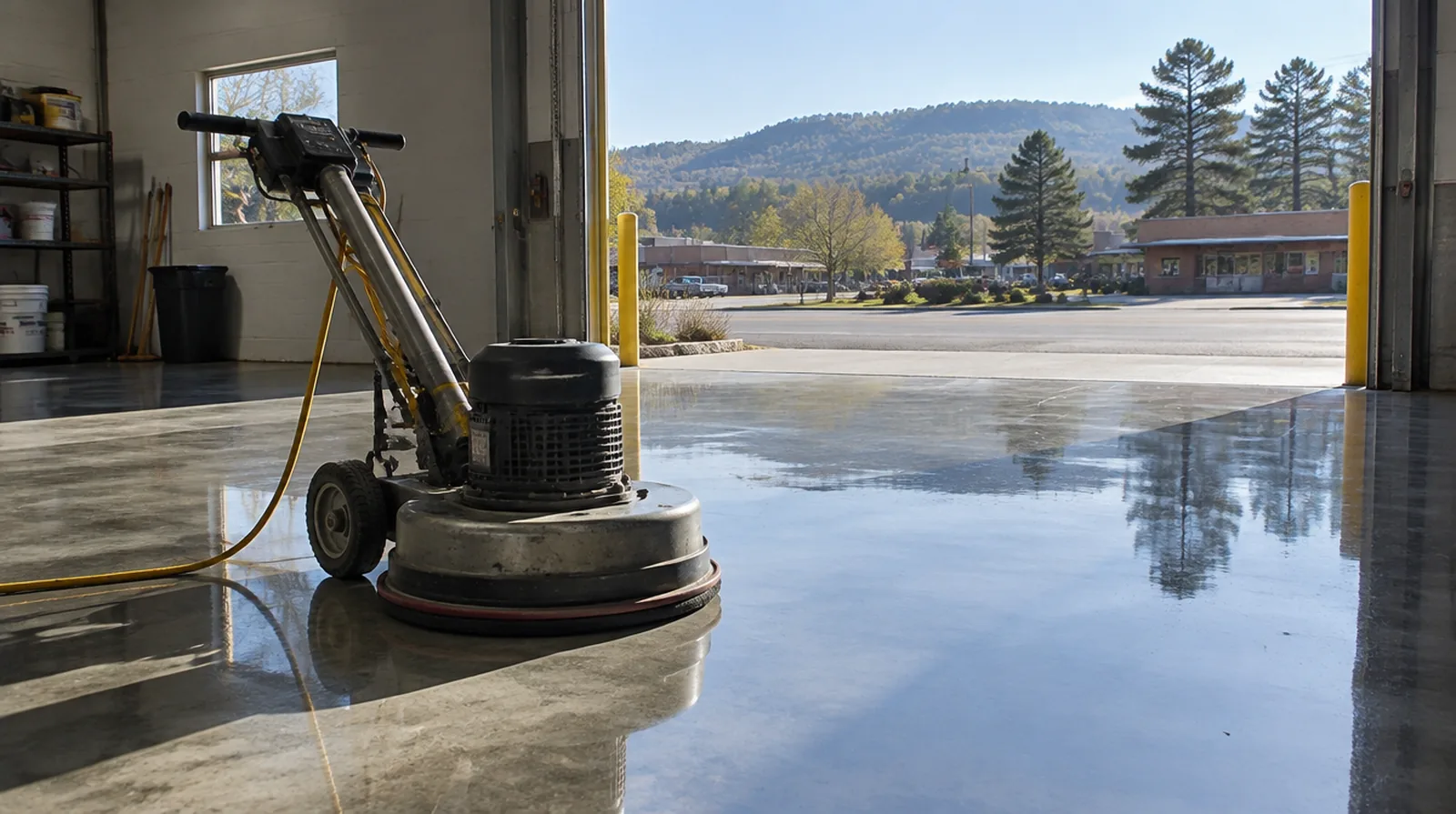
Process
Grind, densify, polish, guard.
Fits
Offices, retail, modern homes and studios with good slabs.
Moisture
Polished concrete breathes, so it works on some slabs that are too damp for coatings. We test to be sure.
Care
Dust mop and clean with a neutral cleaner.
If your slab is damaged, a coating may be better.
Why it can work on damp slabs
Unlike a coating, polished concrete does not trap moisture under a film, so it can be a good choice for some slabs that are too damp to coat. We still test, because very wet slabs can cause other problems.
What the process involves
Heavy grinding to flatten the surface, a liquid hardener that soaks in, then polishing with finer and finer diamond pads. A stain guard finishes it.
Best uses
Retail floors, offices, studios and modern homes with solid slabs.
Maintenance
Sweep, damp mop with a mild cleaner, and buff occasionally to keep the shine. No coating to recoat later.
Polishing questions
Can a farm shop be polished? Often yes, and it holds up to equipment without peeling.
Will old stains show? Some grind out; deep ones may remain.
How shiny can it get? From matte to high gloss.
How long does it take? Two to four days for most spaces.
Polished concrete in Russellville suits shops, warehouses, offices and modern homes, especially where moisture makes coatings risky. With no film on top, there is nothing for moisture to push off. We grind, fill cracks, densify and refine with finer pads to the sheen you want, then add a guard sealer. Vacuums capture the dust as we work.
Daily care
Dust-mop often, wash with a neutral cleaner and keep walk-off mats at doors. Grit dulls the shine more than anything else. A burnish every year or two restores gloss in busy areas, and there is never a coating to strip or redo. A satin finish hides scuffs in shops; higher gloss suits offices and homes. Dyes can be added during polishing if you want warmer tones than plain gray.
Moisture and polish
Because polished concrete has no film on top, moisture rising through older slabs near the lake will not lift it. That makes polish a smart pick for lower-level rooms and shops on damp ground.
Timeline
Two to four days for most spaces.
Polished floors in older brick buildings
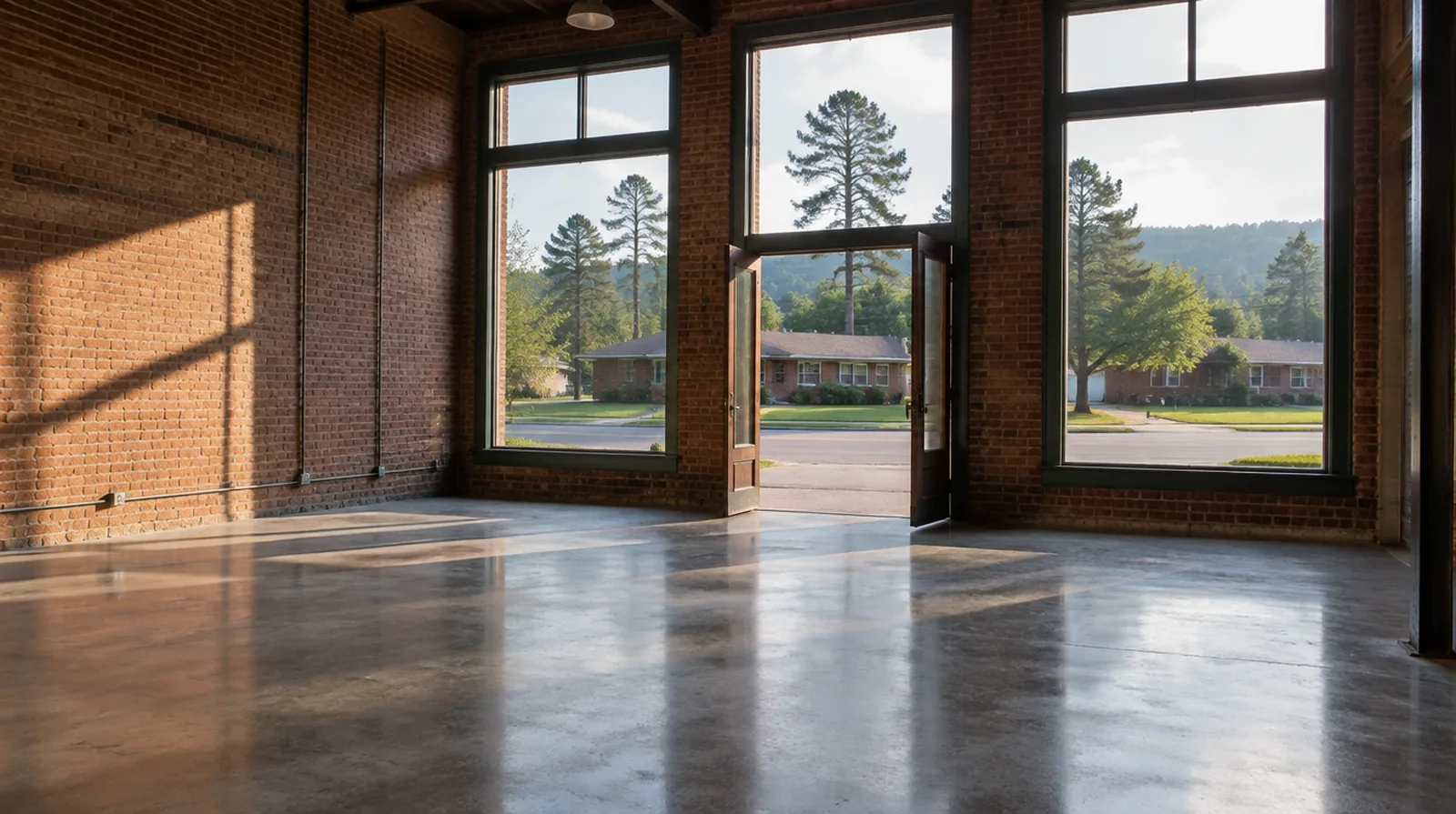
Downtown Russellville has a row of older brick storefronts along Main Street and the streets that cross it. When those buildings are renovated, the original concrete often turns up under layers of tile, carpet and glue. Polishing that slab can give a shop, café or office a clean, natural floor that fits exposed brick and tall windows. Old patches, saw cuts and the faint outlines of former walls stay visible, which many owners like because it shows the building's history.
How the grind and polish steps go
We start with coarse diamonds to remove glue and level the surface, then work through finer grits until the concrete reaches the sheen you picked. Partway through we apply a densifier that hardens the surface. A final guard coat helps resist stains from coffee, oil and spills. Cracks can be filled with a color-matched filler or left visible for a more industrial look.
Is polished concrete right for you?
Polished floors work best where the slab is in reasonable shape and the space gets steady foot traffic, such as retail floors, offices, churches and open living areas. They are less suited to garages where vehicles drip fluids, since raw concrete stains more easily than a coated floor.
Polished concrete in homes
Some homeowners near town choose polished concrete for a new build or an addition, especially in open kitchens and living areas on slab foundations. The floor stays cool in the summer heat, works well with radiant heat and pairs with rugs for warmth in winter.
Polishing questions
How shiny will it be? You choose. A satin finish looks soft and natural, and a high polish reflects light like glass.
Is it dusty? We grind with vacuums attached to the machines and use wet methods where they fit, which keeps dust down in occupied buildings.
Ask about polished concrete
Call (479) 317-8028.