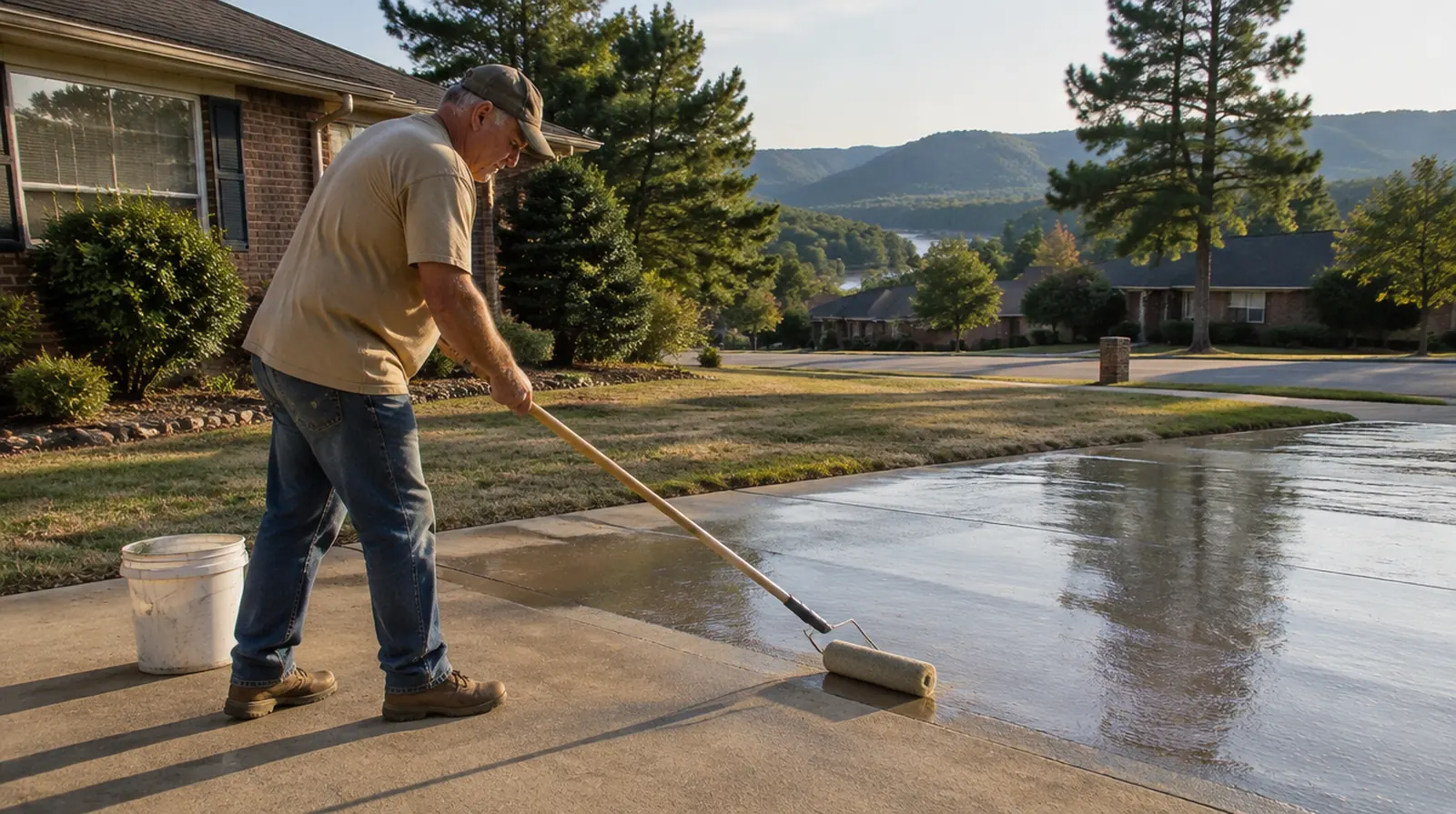
Why seal
Humidity and rain keep concrete damp. Freezing can flake the surface. Sealers slow water entry.
Types
Penetrating for a natural look, topical for sheen.
Where
Driveways, walks, patios and boat ramps at home.
For indoor floors, see epoxy.
Boat ramps, driveways and patios
Concrete near the lake and in shady yards stays damp longer, and freeze-thaw cycles can make the surface flake. Sealing helps it shed water and resist stains.
Choosing a sealer
Penetrating sealers soak in and leave a natural look. Topical sealers form a film and add sheen.
Prep
We clean and degrease the concrete and let it dry fully before sealing.
How often
Every few years for most surfaces.
Dardanelle lakeside homes
Homes near the lake have patios, walks and pads that stay damp and grow algae in shady spots. Cleaning and sealing helps the surface shed water and dry faster.
Campus-area rentals
Landlords near Arkansas Tech can seal walks and driveways between tenants so stains wash out more easily.
Sealing questions from Pope County homeowners
Does sealing help with the white powder on my patio? That powder is efflorescence, salts carried up by moisture. We clean it off, and a breathable sealer helps limit how much returns.
Can you seal a lake-house boat pad? Yes, with a penetrating sealer that handles water and sun.
Will sealer stop ice damage? It greatly reduces water absorption, the main cause of winter flaking.
Should rentals be sealed? Many landlords seal walks and patios between leases to keep them presentable.
Humid summers off Lake Dardanelle, spring storms and winter ice all work against bare concrete in Russellville. Concrete sealing protects driveways, walks, porches, patios and shop aprons. We pressure wash, treat stains and efflorescence, let the slab dry fully and apply sealer during dry spells in spring or fall.
Which sealer is right?
Penetrating sealers soak in, breathe and keep the natural look, which makes them best for exposed driveways and boat pads that see freeze-thaw. Film-forming acrylics add sheen and bring out color on covered patios and stamped concrete but need refreshing more often. We match the product to the slab and how it is used, and test a small spot on decorative concrete first.
Reseal schedule
Every few years for most exposed concrete around town.
Protecting plants
We cover beds and rinse nearby siding during application.
Sealing a driveway and front walk
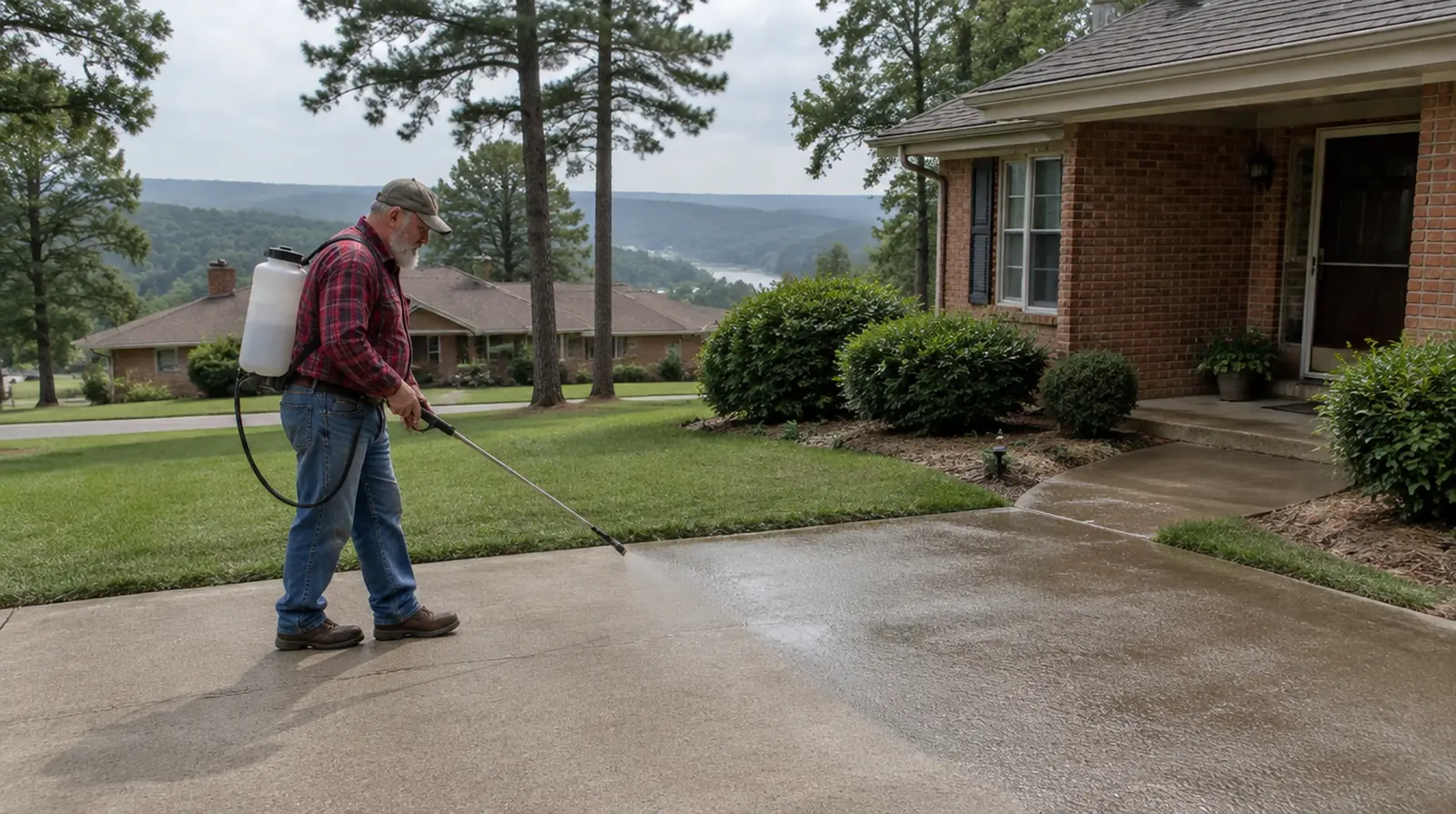
Driveways and sidewalks around Russellville take rain, red clay, pine sap and summer sun. A penetrating sealer soaks into the surface and helps the concrete shed water instead of absorbing it, which slows down freeze damage in winter and keeps stains from setting. We clean the surface first with a pressure washer and degreaser, let it dry and then spray or roll the sealer in even coats, keeping it off the lawn and flower beds.
Penetrating sealers versus film-forming sealers
Penetrating sealers do not change the look of the concrete much and leave the surface with natural traction. They are a common choice for driveways and walks. Film-forming acrylic sealers leave a sheen and can darken the color, which many people like on stamped or decorative concrete. They wear faster and can get slippery when wet, so we may add a grit to them on steps and slopes.
Lake and farm concrete
Boat ramp aprons, dock landings and patio slabs near Lake Dardanelle face constant moisture. Farm slabs around barns and feeding areas face manure, fertilizer and heavy equipment. For those, we choose sealers that handle repeated wetting and help resist staining, and we talk about how often they will need a fresh coat.
Signs your concrete needs a fresh coat
Splash a cup of water on the slab. If it beads up, the sealer is still working. If it darkens the concrete and soaks in within a minute, it is time to reseal. Flaking surface paste, spreading stains and green growth in shady spots are other clues.
Sealing questions
When is the best time of year to seal? Mild, dry days in spring or fall are ideal. We avoid sealing right before rain or on very hot afternoons.
How long before I can drive on it? Usually after a day, depending on the sealer and the weather.
Get a sealing quote
Call (479) 317-8028.