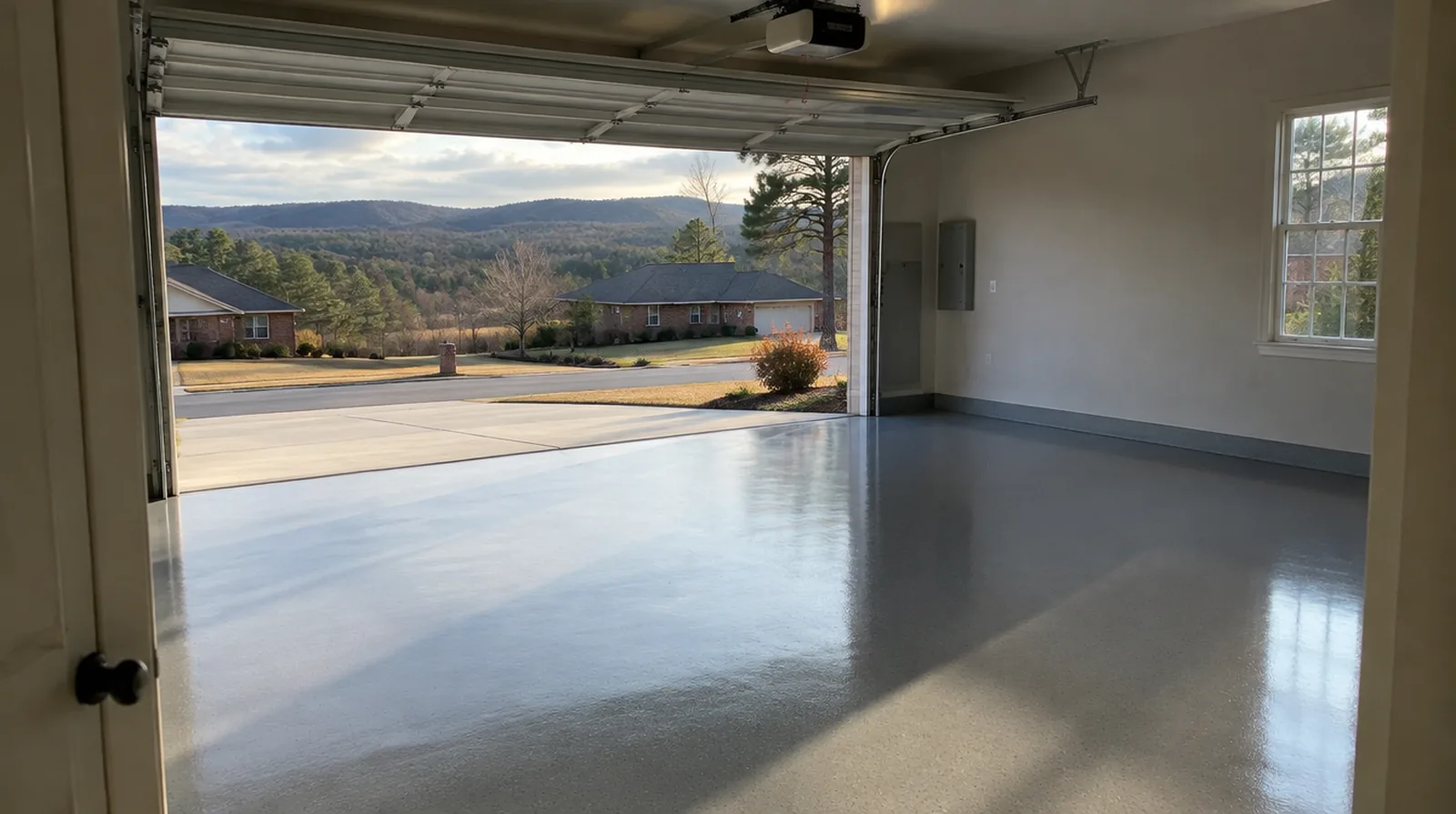
Damp slabs and what to do about them
Concrete is porous. On moist ground, water vapor moves up through it. Older slabs often have no vapor barrier. If we coat right over that, the vapor pushes the coating up. We test first, and if needed, use a moisture-blocking primer.
Our process
- Diamond grind with dust collection
- Fill cracks and pits
- Moisture test and primer choice
- Colored body coat, with flake if you like
- Clear top for wear
Lake and field gear
Boats, ATVs and hunting gear bring in mud and water. A coated floor makes it easy to hose out.
Summer installs
Humid days can slow curing. We plan around temperature and humidity so the coating sets right.
Downtime
Two days for most garages. Polyaspartic can shorten it.
Garage questions we hear in Russellville
My slab stays damp in summer. Can it be coated? Yes, after a moisture test, with a primer made for higher moisture levels.
Can a boat and truck share the garage? Yes. We build thicker where trailers park and suggest a pad under the jack.
How long before I can park? Usually a few days, depending on heat and humidity.
Do you coat detached shops? Yes, as long as we have power and access.
Garage floor epoxy in Russellville starts with that moisture test, then grinding, crack repair, primer, a color or flake body coat and a tough clear top. Install usually takes one to two days. We give you written times for walking, moving things back and parking, plus care tips. In humid weather we check dew point first so the coating cures clear.
Cost factors
Size, slab moisture, crack repair and system choice all affect price. Damp slabs that need a special primer cost a bit more, and we explain that up front. Every line is in the written estimate.
Hot tires in July are no problem for a thick, ground-in system.
Steps into the house
We can coat them with grit added.
Coolers, decoys and waders
Coolers, tackle boxes, decoys and muddy waders are hard on bare concrete. A coated floor with flake hides the mess and hoses clean, and a thicker build where boats and trailers sit handles the weight. Install cabinets and racks after the floor cures so the coating runs underneath cleanly.
Why we test the slab before anything else
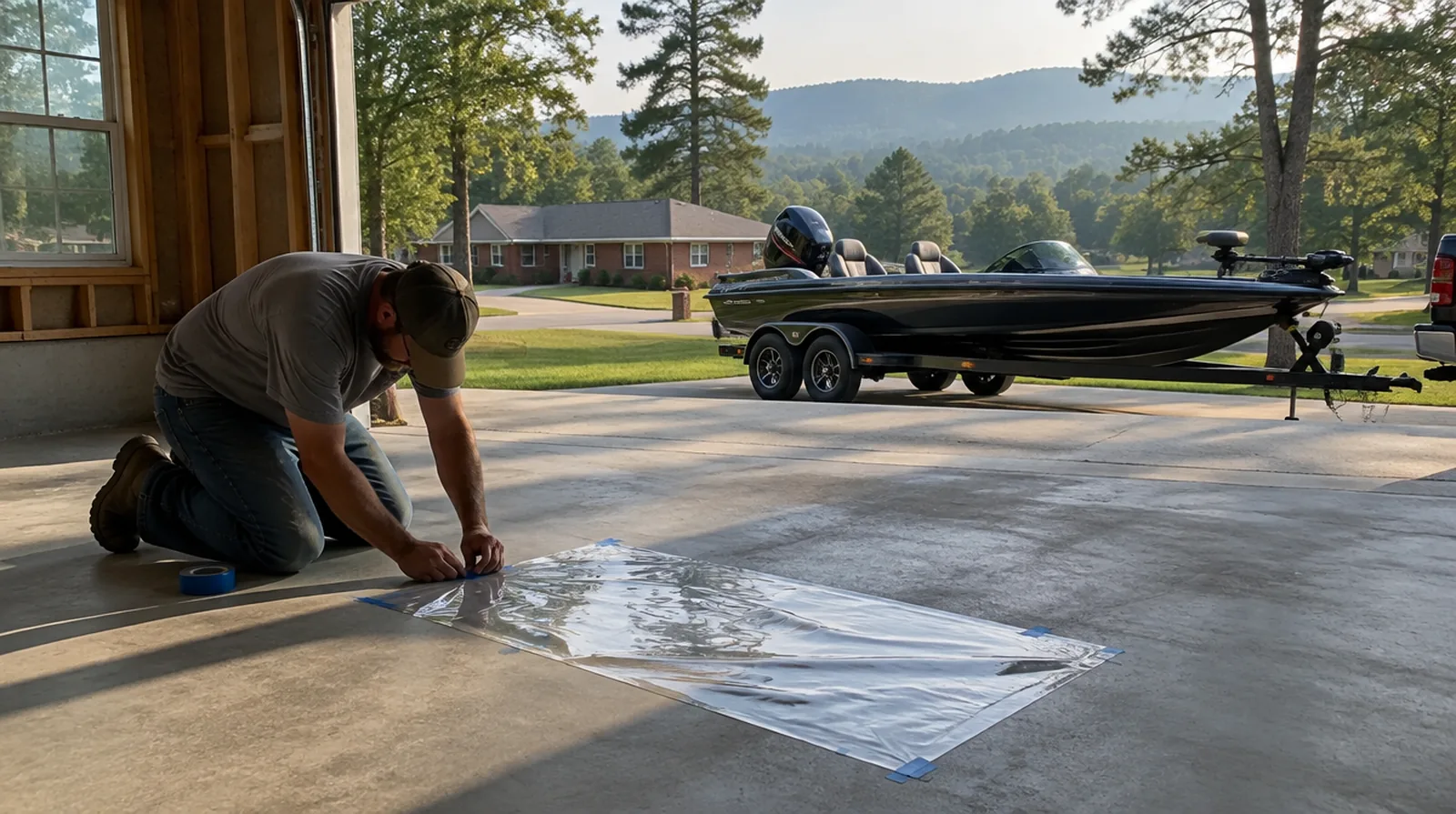
After the floor is ground open, one of the first things we do is tape down a clear plastic sheet and let it sit. If droplets collect under the plastic or the concrete beneath turns darker, the slab is still pushing vapor. That simple check, along with a meter reading, tells us which primer to use. On garages built on the clay soils that are common between the river and the foothills, we see more readings on the damp side than in many other towns, especially after a wet spring.
Skipping that step is the main reason garage coatings in the area turn into peeling sheets after a year or two. A few hours spent on testing saves a full tear-out later.
What changes on an older slab
Garages behind older homes near downtown were often poured thinner and finished by hand, so they have more pits and uneven spots. Some have years of oil soaked into the area where a car sat. We grind deeper on those floors, clean out stains with a degreaser and fill low spots so the color coat goes on evenly. If someone painted the floor years ago, that paint has to come off completely before we start.
Bringing the house step and the door edge into the plan
The step into the house and the strip under the garage door take the most abuse. We coat the step faces and treads, add grip to the top coat, and finish the edge at the door so water running in under the seal does not catch a lip. If your garage door seal is torn, we will point it out so you can replace it before the next storm.
A few practical questions
Will hot tires lift the coating? Not on a properly prepared, ground slab with a full-strength system. Hot tire pickup is mostly a problem with thin roll-on kits.
Can you work around a freezer or a water heater? Yes. We move what we can and coat up to anything that is too heavy or plumbed in, then seal the edge neatly around it.
Book your garage estimate
Call (479) 317-8028.