River Valley conditions
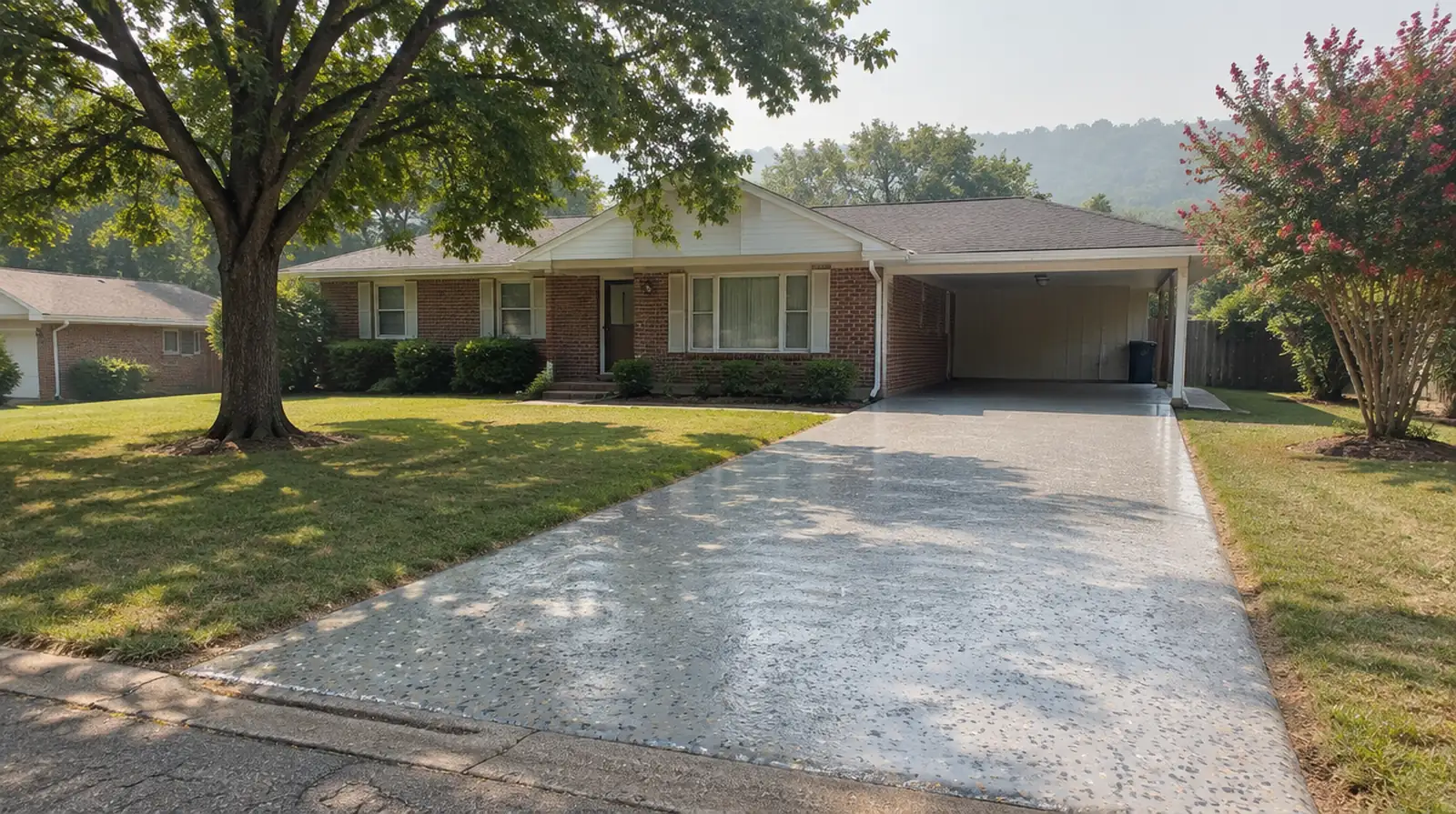
Russellville sits in the Arkansas River Valley between the Ozarks to the north and the Ouachitas to the south, with Lake Dardanelle along the west side of town. Summers are long, hot and humid. Spring brings heavy rain and severe storms, and most winters include at least one stretch of freezing rain or snow. Bare concrete absorbs water, then freezes, heats and dries over and over. That cycle, plus oil and mud, is what wears driveways out. A good coating seals the surface and handles the swings.
Houses and driveways we see
- Older ranches from the 1960s through the 1980s with long driveways, carports and years of stains.
- Newer subdivisions with wide two- and three-car driveways that owners want to protect early.
- Rentals near Arkansas Tech where a durable, easy-clean surface cuts down on turnover work.
- Lake and country homes toward Dover, London and Pottsville with RV pads, shop aprons and boat parking.
What goes on the concrete
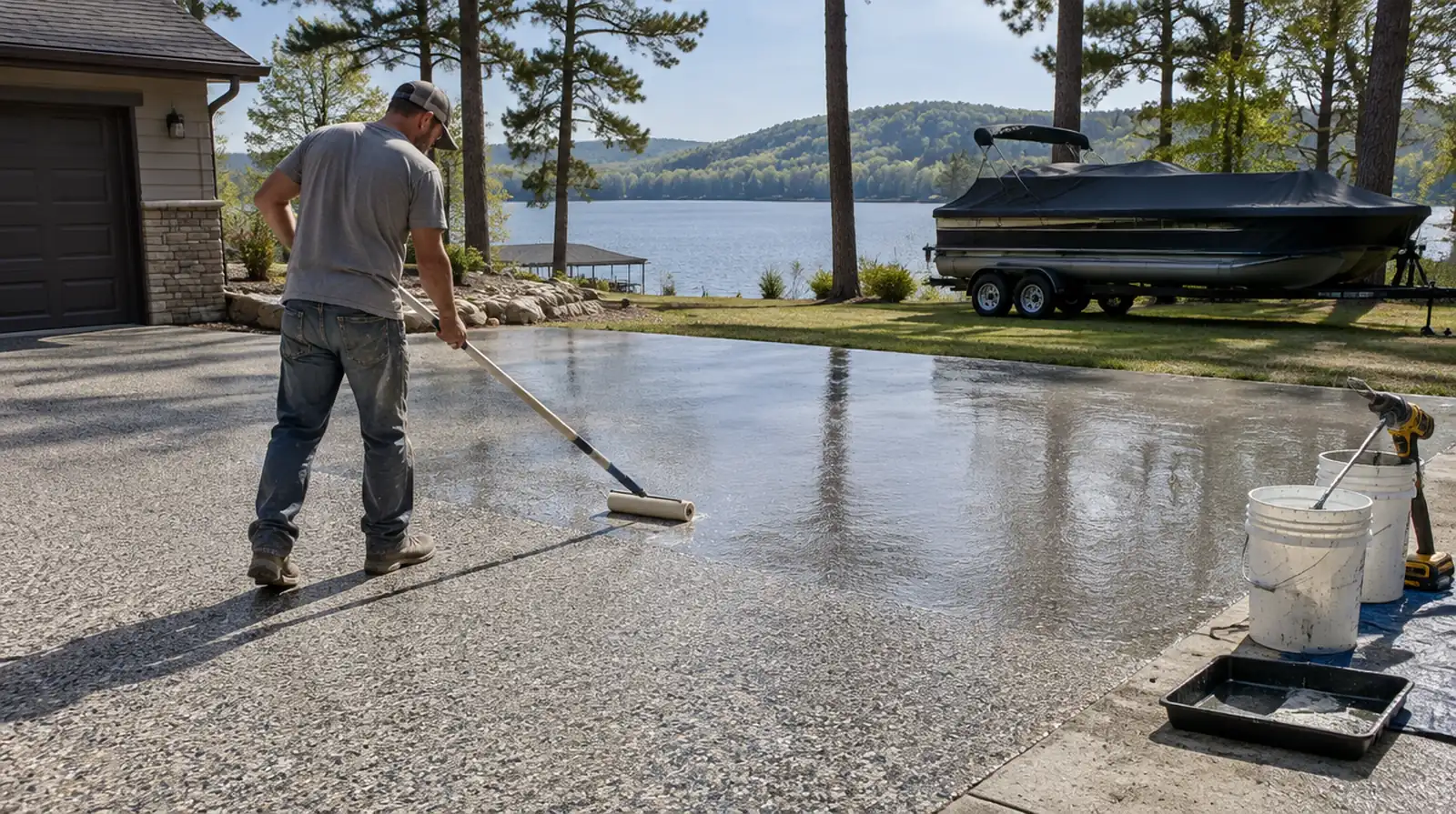
We use outdoor-rated systems, not basic garage epoxy, which yellows and chalks in the sun. A typical driveway gets a colored base coat, an optional flake broadcast and a UV-stable polyaspartic or urethane topcoat. Fine traction grit is mixed into the topcoat so the surface is not slick in rain or on a frosty morning. If you want to keep the look of plain concrete, a clear coat or penetrating sealer is an option too.
Prep comes first
Coatings fail when prep is rushed. On every Russellville job we:
- Check moisture. Concrete holds water for days after the spring storms, and we will wait if it is too wet.
- Grind the surface with diamond tooling to remove old sealer and the weak top layer.
- Degrease oil and fluid stains so they do not bleed through.
- Fill cracks and patch pitted or scaled areas.
- Clean thoroughly before the first coat goes on.
Clay soils in the valley shift with wet and dry seasons, so cracks are common. Filling and coating them keeps water out and slows further damage. If a slab has settled badly, we will tell you up front.
Working around the weather
Spring and fall are the best seasons for exterior coating here. In summer, we start early in the morning so the slab is not too hot, and we avoid days with afternoon storms in the forecast. In winter, we need a stretch of dry days above about 40 degrees. Most driveways are done in one or two days, with walking traffic that evening and cars back on after a day or two.
Boat trailers and heavy use
With Lake Dardanelle and the Arkansas River close by, plenty of local driveways hold a bass boat or pontoon trailer. Trailer jacks press hard on a small spot and outboard motors drip. A flake system with a thicker topcoat holds up best, and we suggest a small plate under the jack stand.
Picking a color
Gray and tan blends with flake hide dust, pollen and red clay the best. Light colors stay cooler under the summer sun. We bring samples so you can compare them against your brick or siding.
Taking care of it
Rinse off pollen and mud, wipe up oil when you see it, use sand or a coating-safe ice melt in winter and a plastic shovel if it snows. A fresh topcoat every several years keeps it looking new.
Questions we hear
Can you coat a cracked driveway? Yes, as long as the slab is stable. We fill cracks before coating. Fine cracks may reflect through in time if the slab keeps moving, but the surface stays sealed and protected.
How long will it last? With good prep and normal use, many years. The topcoat takes the wear, and a recoat is much less costly than the first install.
Can you coat a carport or a shop apron at the same time? Yes, and it usually saves money to do them in one trip. Shop aprons see the heaviest oil and tire wear, so we often suggest a thicker topcoat there.
Related services
Coating the garage too? See our epoxy flake flooring page. For older coatings that are peeling, check out epoxy floor repair. We also serve Dardanelle, Atkins, Pottsville and Dover.
Get a free driveway estimate
Call (479) 317-8028 and we will come take a look and give you a written price.