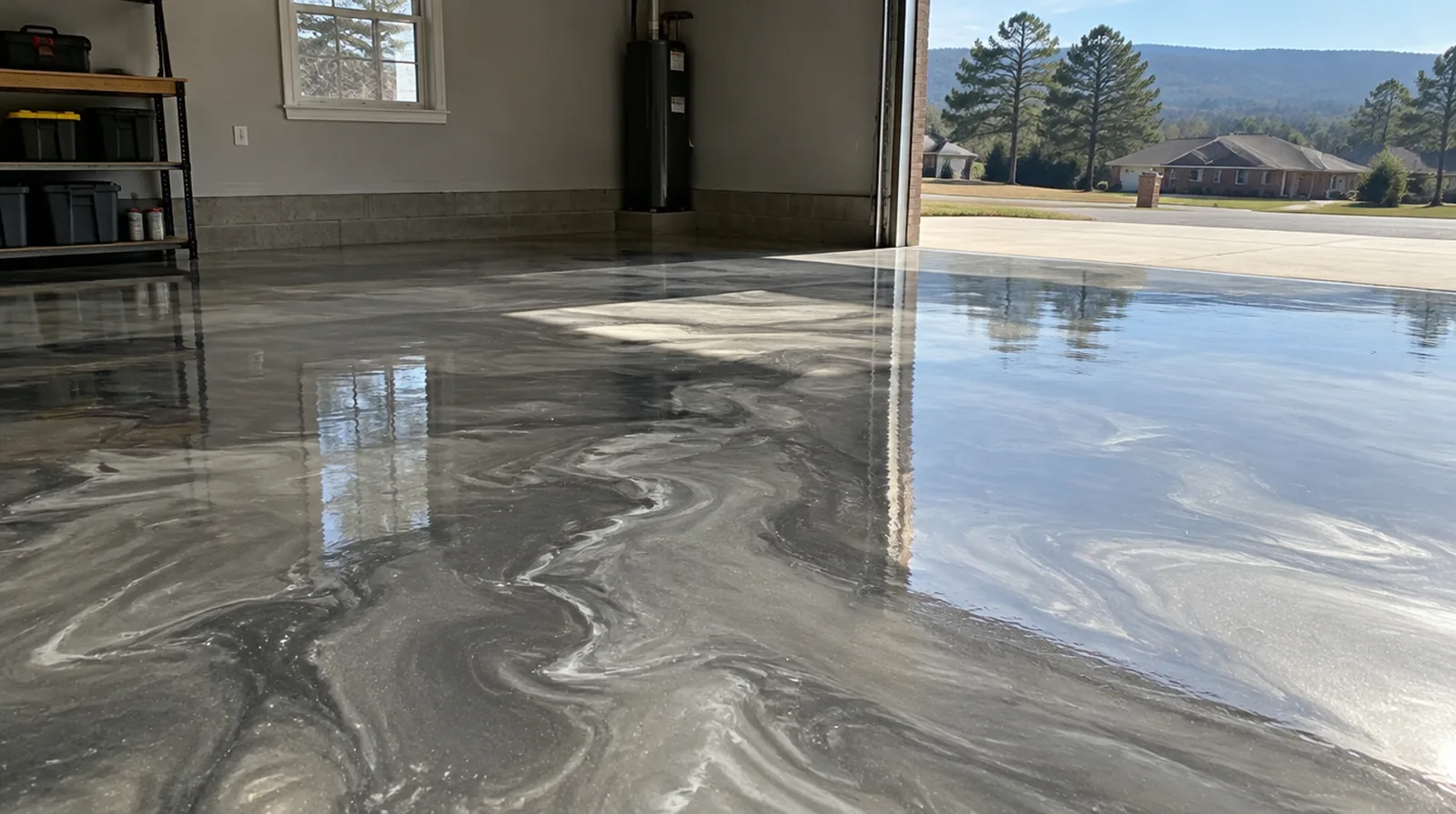
Where it works
Finished basements, bonus rooms, salons, offices and retail spaces.
How it is done
After prep and primer, we pour clear epoxy mixed with metallic pigment and work it by hand while it levels.
Considerations
Careful prep is key. Gloss shows scratches, so a polyaspartic top is often added. Humid days can affect cure, so we plan around the weather.
Care
Sweep often and use pads under furniture.
Studios, offices and shops
Russellville has offices, salons, boutiques and small studios where a metallic floor makes a strong first impression. In homes, it is popular in finished basements and bonus rooms.
The look
Swirls of metallic pigment suspended in clear epoxy create depth that shifts as you walk across the room. It can be subtle or dramatic.
Before the pour
We grind, patch and sometimes skim the slab, because the metallic layer is partly see-through. On damp slabs, a moisture-blocking primer goes down first.
Timing in humid weather
High humidity slows cure and can affect the finish, so we schedule metallic jobs when conditions are right and keep the room closed while it cures.
Metallic questions
Can it go in a lake house? Yes, indoors, after a moisture test. Mats at entries keep sand off the finish.
Is it slippery? We can add grit or use a satin top.
What colors are popular? Blues and greens that echo the lake, silvers for modern spaces and coppers for warmth.
Metallic epoxy in Russellville fits home bars, game rooms, offices, salons and storefronts downtown. It is poured and worked by hand, so each floor is unique. We grind flat, fill cracks, prime and pour, then seal with a clear top. Plan on three to four days, and keep pets out until it cures.
Getting the room ready
Metallic floors show every flaw beneath them, so prep takes longer than for flake. We remove old flooring and adhesive, grind the slab flat, fill cracks and holes and sometimes add a leveling coat. In humid weeks we run dehumidifiers and keep doors closed so the pour cures clear. Light furniture can return after a couple of days, heavy pieces after about a week. Felt pads and a dust mop keep the finish bright.
Satin or gloss
Satin hides scratches and dust better; gloss shows the most depth.
A metallic floor in a lake house
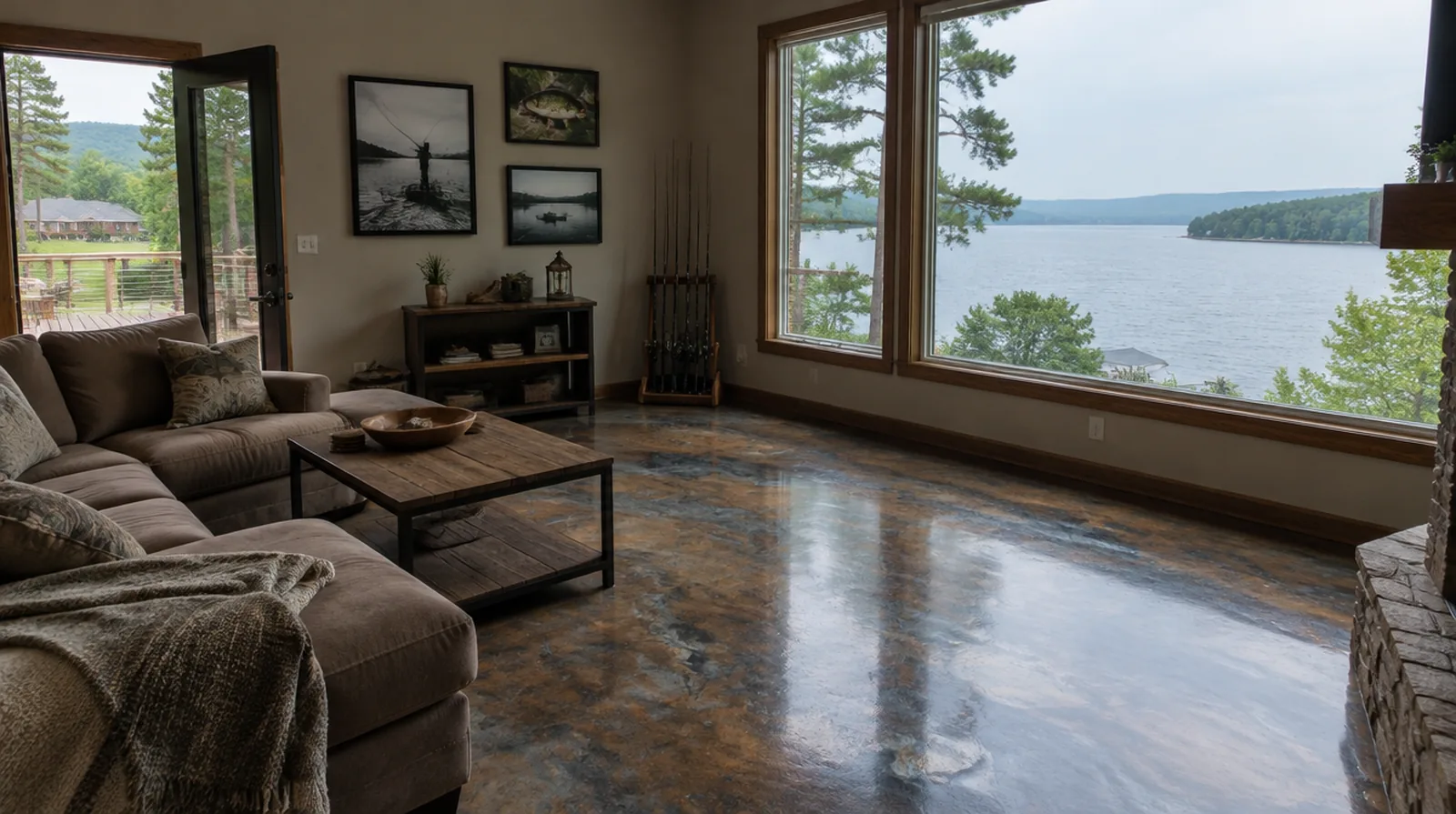
Homes along Lake Dardanelle and the coves off the river often have a lower level or den that opens onto a patio. Those rooms usually sit on a concrete slab that was carpeted or tiled, and they take a lot of wet feet, sandy shoes and coolers. A metallic epoxy floor turns that slab into a durable surface with depth and movement, in colors that echo water and stone. Bronze, pewter, deep blue and charcoal are popular around the lake because they pick up the light from big windows.
We remove the old flooring, grind away adhesive, repair cracks and then pour the metallic layer. Every floor comes out a little different, since the pattern forms as the pigment moves in the wet coating.
Where else metallic makes sense in town
Business owners along Main Street and near the Arkansas Tech campus sometimes use metallic floors in a salon, small shop or office lobby. Homeowners use it in a game room, a home gym or a converted garage studio. Metallic is not the best choice for a working garage where heavy tools get dropped, since scratches show more on a glossy solid surface than on flake.
What to expect on install days
Most metallic projects take three days: one for prep and primer, one for the metallic coat and one for the top coat. The room needs to stay closed, dust-free and at a steady temperature while it cures. We cover vents and doorways with plastic and ask that ceiling fans stay off.
More metallic questions
Is it slippery? Gloss can be slick when wet, so we can add a fine anti-slip additive to the top coat in areas near doors and patios.
Can I see the pattern ahead of time? We show photos and samples of past color mixes, but the exact swirl cannot be planned, which is part of the appeal.
Talk about a metallic floor
Call (479) 317-8028.